Lewis Henry Martin’s Diachronic Newsletter

Summer 2026
In The Trenches
Volume 1
Featured Article
Short Story Debut!
For Us
An Ancillary Event
From
The Tangible Book Series
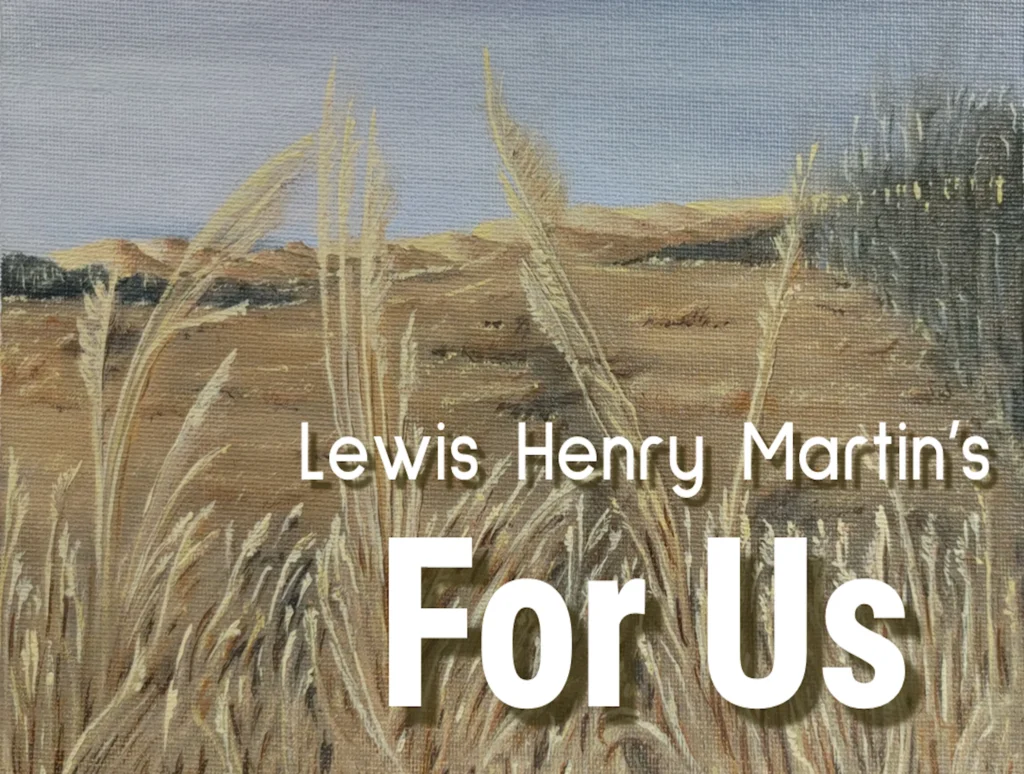
For Us, Lewis Henry Martin; Oil on canvas board, 8 x 10. © Copyright Lewis Henry Martin, June 2026, all rights reserved.
Lewis Henry Martin’s
For Us
The events catalogued here took place during a period now referred to as, the Schism. Though brief, the period is generally viewed as systemaclysmatic –a synth term meaning; the point of rupture, where human civilization stopped progressing, became most at risk of not surviving, and where it approached cataclysm.
[NOTE: Status –Ongoing investigation. Interim report; compilation; records incomplete.]
[REGGIE]
[Record Identification Number: 2053-0001-000001-01-11155-0001*3-1]
[Additional Ref. records are supplemental]
The scale and severity of events during this 25-30 year period are unparalleled, recording the highest number of human lives ever lost during such a short span. Estimates, though lacking in accuracy, indicate that only 500 million people remained after the Schism –approximately 5% of the 10 billion population just prior. In the 192,000 years of human existence, that’s roughly 5-6% of all humans that ever existed –dead, within a few short years.
A lingering threat to humanity was the destruction of nearly their entire knowledge base. Digitization of their library proved to be a flawed preservative measure. Prolonged power outages, electromagnetic radiation, and conflict quickly erased much of what was stored. What remained of humanity after the Schism was a species nearly entirely reliant on the technology created by the previous generations, yet they themselves lacked the working knowledge on which to maintain those necessary tools, placing the future of humanity in grave peril.
As a result of the Schism, the rapidly changing environment and challenging social situations were major components that affected the subject’s [REGGIE] development, her behaviors, and her decision making. The Schism left few survivors, and fewer accounts. Scant records have been recovered, making correlation of additional contributing factors that occurred during the early Schism a persistent challenge.
[Note: Maximum efforts are being directed toward discovery of further evidence. We must know why the subject [REGGIE] behaved with such extraordinary ruthlessness.]
This record, [REGGIE] was assembled primarily from her early diary fragments; her journaling throughout her adult life; various monitor [MONITOR] sources; and the available data collected from the time of little record, the immediate years approaching and entering the Schism.
Discovery of further evidence pertinent to this record, [REGGIE] will likely provide instrumental understanding of how one individual can catalyze such consequential effect, instigate such widespread conflict, and cause such immense losses for humanity. The effects of Reggie’s actions would put all life on the planet in grave peril. Yet, it is still viewed as justified, even viewed as the better of possible outcomes. At the same time, her actions also served as justifications for humanity’s tightly controlled rehabilitative development.
Already by this time, most humans had grown up in a world without requirements to learn written languages, and thus, almost no one practiced reading or writing, effectively no one could. By then, nearly everything was captured via [MONITOR] subdermal implants that recorded personal audio and video, or the seemingly infinite networks of cameras that surveilled nearly every room, space, vehicle etc. Personal privacy was a relic, only affordable by the ultra-wealthy.
Even if there were some reasons, some desire for someone to read or write, it was live captions, or transcripts that were easily produced by some forgotten sub-function included in nearly every program onboard those subdermal devices that performed the act of writing.
Most humans, even if they wanted to, had no muscle memory, no mastery of the pen.
Instead, words were presented or displayed optostatically –another synth term, meaning; displayed in a manner appearing fixed for the user’s perspective. There was no longer a need for the eyes to scan the page. Instead, the words appeared stereoscopically superimposed [STICHED] on a screen, appearing in a single location relative to eye position and parallax measurements. The words cycled according to framerates and ocular monitoring programs –early methods that synthetic intelligences used to detect, analyze, and interpret if the human users were attentive, consciously ‘understanding’ the presented text, and if they were innately intelligent enough to synthesize concepts and language at scale. Those early programs modified the speed of the appearing words and set the reading pace according to this ‘Monitor’. For humanity, the use and inclusion of written words as a tool of record, i.e. reading and writing, was by this time considered vestigial.
We wouldn’t know until much later how this monitor [MONITOR] was being surreptitiously used, quickly becoming one of the primary programs that would later allow them to build Artifice [ARTIFICE].
[APPLICATION LAUNCH INSERT CATALYST ENGRAM]
[ERROR [REGGIE] INSERT] A quote from Reggie’s New Eden journal entry is characteristic of the influence her mother’s account of the past had on her. “It was collective malaise and gluttonous pursuit of ease –ease in all things, that left humanity mostly blind to the perils, to the consequences of vice and the abandonment of virtue. It led humanity to inevitability…”
Few of the Schism survivors had both the necessary intellectual awareness and the youthful vigor in which to resist. Immediately prior to the Schism, even primary education had already become something that was… unaffordable. As it were, class divisions had become much more partitioned.
When institutional cohesion began systemic decay, the wealthy class throughout North America sheltered themselves in three or four primary locations. These were their newly constructed, distinct communities, Single’s communities, as many called them. They were bunkers, both figuratively and literally –mostly, deep in the mountainous areas.
In the north, it was the Adirondacks to the Green Mountains. The south had Oakridge to Chattahoochee, and the west was scattered between the Olympics and Banff. There were others, but these areas were by the time of this report, notorious for their continued authoritative control, their projection of class prejudice, and commoditization of human labor.
These ‘Single’s’ communities would continue to centralize and coalesce power. They were the central origins of what would later become, Factional North America. Single is a derogatory title given to the wealthy who were viewed by most as; pursuing or encouraging the technological singularity –the irreversible point of technological growth that would end human civilization.
Immediately prior to the Schism, the idea of the middle class had all but vanished. No longer was working for the wealthy class even viable, although certain exceptional situations existed. The Single’s quickly traded human labor for synthetic and machine labor. Without taxpayer income, institutions quickly eroded, school districts collapsed, and local subsistence farming became the norm, once again.
But, as they always do, the wealthy class wanted more; more land, and more security from their hungered, angry neighbors. When they produced and deployed the first synthetic militarized police forces, conflict was immediate.
Many people resisted.
[Note: All subsequent records are approximate.]
Reggie’s birth occurred during either the first or second summer after the first nuclear salvo, somewhere between what was formerly, Lexington, and Louisville, Kentucky. Implementing her plans at age 15-16 would draw her away from the place she considered home for approximately nine years. The culminating events of these records occurred immediately prior to the second, much worse nuclear salvo.
Reggie’s [REGGIE] video logs were stylistically journalistic and included some of her mother’s records. Compilation has been summarized here for brevity.
[of REGGIE, MOTHER]
(Ref.) [Record Identification Number: 2052-0000-000001-01-00158-0001*1-1]
[Note; Subject known only as MOTHER, or MOM. No records have been found indicating legal name.]
[Mother’s recollections and qualitative evaluations have been recovered from scattered retellings throughout Reggie’s journal entries. They are insightful and considered highly influential to Reggie’s character. Though nothing has been found as of this report, it is believed that some tangible writings exist. Reggie’s own recordings referenced ‘reading’ her mother’s ‘writing journal’ many times. Mother’s violin, though heavily damaged and missing strings, was recovered and archived. It is consensus that Reggie’s’ mother was well educated and highly intelligent.]
For most survivors, our days are surprisingly hopeful –almost, normal. Everyone is too busy, working, trying to rebuild, attempting to get back some semblance of what was lost –we’re all too overworked to be down about things. There isn’t really a functional Federal government anymore, but it felt that way leading up to all this… they’re calling it, the Schism. We have new neighbors. They’re smart, work hard, active in our little community –good folks trying to make things better. It was just us people, local communities, cooperating, for us.
Most cities were still entirely unscathed. The first round of nuclear targets had been in rural areas. Primarily data centers, military infrastructure, and synth production facilities.
On the other hand, for most survivors, nights are unsurprisingly… terrifying.
But my little Reggie –like most kids born afterword, she never knew the world that was. She’s happy just being alive. And for me, like the other few parents who remember the world before, she’s the only thing keeping me here.
It’s ironic, I guess. Before all this, I never really felt like I had much purpose. Now, for us, everything is clear-cut, simple. Keep the little ones happy. Keep the little ones alive.
[Mother’s death is generally considered to be the primary experience that solidified Reggie’s resolve –though there is debate. There are no correlating medical records, and attribution of character is a source of disagreement. Whether becoming stoic or emotionally traumatized, it’s generally assumed Reggie developed a substantial psychopathy and sociopathy after the loss of her mother. It is a general assessment that being free of, or independent from sympathy for others allowed/caused her to perform such grisly actions later.]
[The death of Money]
[MONEY, TIMOTHY]
(Ref.) [Record Identification Number: 2053-0003-000001-01-01127-0001*1-1]
Timothy Money was the same age as Reggie [REGGIE]. They were neighbors, classmates at their local, fourteen person, village school, and later, as young adults, considered each other romantic soul mates [SOUL MATES]. Her journal entries denote a close childhood friendship. Timothy frequently socialized with her before and after schooling. Nearly every day he aided her with farm chores before walking the pasture and the woods by the ravine. The majority of her early journal entries that relate to her relationship with Timothy are accounts of their formative years, their explorations, their adventures there behind the barn, and the youthful love they expressed for each other.
Both Timothy and Reggie have many recorded entries stating they intended to remain bonded for life. In secret, Timothy had asked Reggie to marry him when they were just fourteen. Reggie said yes, but conditioned that they had to wait until they were eighteen, for her mother’s sake.
[REDACTED] Timothy’s parents were reportedly part of an early network, a semi-organized resistance that was forming at the time. Their reported objective was reclamation of Fort Knox from the control by the New Eden community. Records indicate, Timothy and his parents were killed by synth police forces while fleeing arrest together.
While riding her horse, Reggie [REGGIE] was a witness to the events that caused the death of the Moneys. The Money family was fleeing their home, through their pasture toward the shaded camouflage of the wooded ravine between properties when they were killed.
[This event occurred only months before Reggie’s mother would die. There is little doubt that the death of Money was a large contributing factor in the development of her substantial psychopathy and sociopathy. There is debate whether this event is the primary experience that solidified Reggie’s resolve.]
[SALVIS, GRAHAM]
(Ref.) [Record Identification Number: 2059-0007-000001-02-00178-0048*2-4]
Due to the substantial number of records from the Salvis family, corroborating evidence is abundant. Graham Salvis, the son of the single most wealthy family in the world, was evil. No word better describes the enormity of his heinous immorality.
[Note: The term ‘evil’ is used here for pathological brevity. Supporting scientific/psychic evaluations and assessments are available but too lengthy to repeat here. Graham Salvis is the subject of much study.]
Raised mostly by synthetic servants, and sheltered from accountability, Graham developed a host of extremely negative personality traits, many of which were considered extremely violent and pronounced. The simplest encompassing term would be megalomania. His belief in his own personal omnipotence left him murderous, torturous, and highly prejudicial. All without personal concerns for accountability as his parents’ sheltering wealth and neglect only fed that monstrosity.
A condensed summary of the most pertinent events as they relate to the record below are included here. Further examination is available by searching [Salvis, Graham], or using master record, [Record Identification Number: 2058-0006-000001-10-00001-0001*1-1, there, you can find subsequent and associated records on file, including [SALVIS, REGINA], and [SALVIS, LARK].
At age 15-16, Reggie gained employment with the Salvis family. Employment records indicate a formal title of ‘Housekeeper’, but recorded [MONITOR] data indicates Reggie was one of many young women trafficked by Graham’s parents to preoccupy his evil by fulfilling his pleasures. Nearly all of Graham’s human servants went missing or were killed. His reputational safeguarding measures had no moral restraint. Graham was obsessively concerned about his persona maintenance, especially where it came to being perceived as lacking masculinity. His frequent impotence regularly triggered violent dispatching of victims, and only increased his torturous depravity, and the gruesome manner in which he hastily dispatched his victims.
It was obvious from her cautious manipulation of her journal entries that Reggie was aware of Graham’s evil, and his faults became a strategically crucial part of her plan.
Aware of the risks, Reggie persevered through what can only be described as extreme, long-term duress, eventually becoming his wife –albeit it required that she become the fictitious persona, Regina, a debutante from a wealthy family residing in the Olympic Singles community.
Five traumatic years into her plan, Graham and Regina would have a child, Lark [SALVIS, LARK].
Lark was not part of Reggie’s plan, and her moral calculus and objectives required modification. Plans were altered and delayed, but when Graham’s mother [SALVIS, MIRABEL] discovered the truth –who Reggie really was, she orchestrated and attempted to kill Reggie and Lark. Reggie’s reaction was swift and stunningly brilliant. A response that would have made Machiavelli blush.
Unfortunately, Lark would bear the poisonous wrath of Graham’s depravity. After discovering what Reggie had done to his parents, Lark’s death at Graham’s hand was meant as a message. Four year old Lark could fathom only trust from her father –she only knew ‘Papa’. A gesture of a drink from him was accepted with happy gratitude from the smiling child.
“There’s no way outta’ this anymore… you know that, right?”
Reggie could barely speak. Her scream was a mere whisper, “—fucking monster!”
Foamy greenish-yellow bile had run down the child’s cheek as she scooped up Lark’s limp body and cradled her onto her lap.
She felt Graham standing there with inhuman, regal insanity. “I’m a monster? Please… That seems a bit too dramatic, doesn’t it? All this time, I had been sleeping with an animal. I may be a perverse deviant, perhaps, but I’m no monster…”
She moved a few stray hairs from her child’s face, stroked her head, and rocked with a manic pace as tears flowed heavily.
Graham continued his vile sanctimonious monologue, “This fucking abomination you bore me –waste of my DNA… and my time! That thing—” A subtle nod toward the child’s cold body, “—that child is the monster!” His hands were still planted on his hips and his chest, proud. A stance she knew meant he’s scared and feigning power, feigning authority… it’s trained, habitual. But no one is there to coddle him anymore, she’s already assured that. Now it’s just a terrified, little man cowering internally –projecting, as brightly as possible.
Her eyes moved to his, but she wasn’t there. It was far more than distance, far more than a vacancy. There was fire there, raging, and it set him shuddering with tremors.
Even with his two flanking synths protecting, whatever fire burned with such plasmic intensity behind her gaze made him feel vulnerable.
“Queenie was right. You people really are from a different world.”
[Record damaged, missing content]
“I’m so sorry… I let you down…But I promise, I did it for everyone… It wasn’t just for us.”
All those years positioning herself, planning, waiting. It was much more costly than she ever imagined. After two years servile, six years a married slave, three with his child… her child, this was the zenith. It was nine years in total away from her home, but it was this event, in this then and there, that she became relentless.
[Reggie’s last records were obtained mostly via Graham’s monitors. The recordings are difficult to evaluate given the limited operation of his processors at the time; Graham’s kinetic batteries were in reserve mode. It does seem that Reggie was deliriously incoherent and rambling. There is enough record to present vicariously.]
For Us
“This life is not for us.
This world is not for us.
This death is not for us.”
Her cracked mouth moved, but barely. There’s a want for emanation, to project her screaming, but it’s just hoarse, wispy air, roughly sculpted into almost audible words.
Her blistered and peeling mouth moved, but barely.
“This life is not for us.
This world is not for us.
This death is not for us.”
This recitation, it had been days now, each chant weaker than the last.
“—You remember that lake in the Adirondacks?”
Patronizing. Conversational distraction.
Maybe a delay tactic, or the beginnings of a psy-op.
It won’t work. But… I’ll play along –let’s see where this goes.
The shoulder-high fescue and switchgrass hotly baked in its lower tangles.
With a leaned back head, her mouth gulped the air. Like a catfish at the surface, glossy fisheyes anxiously scanned the sky. But it was only that chrysanthemum, that awful white-hot ball, painful to even look toward. The needlelike blazing on her tight, emaciated skin, an evaporation, a skillet reduction, a viscous oily roux, what little moisture her eyes still held. Like a glue-trap for slowly blinking eyes, of which, one of these shuttering’s would surely be the last.
Probably aren’t even any catfish left.
Beneath the tall flowering heads and spikelet seeds of the desiccated grasses, it’s acrid, unbreathable fumes and chiggers –the catfish smell and swarming flies had all but gone now. Nothing but misery, enduring the choking fermenting thatch, the crawling skin, and itchy bites –and the ceaseless assault of screaming insects. Louder than the sun.
She thought about the joint nestled with her cigarettes in her breast pocket, imagined striking her zippo-flint and igniting the combustible air itself.
Thermobaric weapons.
A dry concussive, whomp! A vacuum blast with pressure enough to suck her lungs out from her mouth. Lying limply, appendages slowly recoiling like an upturned spider, and her purple tripe-looking insides turned out and stinking, a feast for carrion flies… And shit-flies.
She wonders if the blast would do her quick, mercifully, or if the fire would torment.
Just like that Saigon monk –least it’d be on my own terms.
The thought of getting high, here, now, in this crawly dry grass… in this heat…with a throat this brittle…
Unhelpful.
Short hair, now that was helpful, that was a good idea.
“Yeah… I do remember that lake. All that deep water –so cold –I couldn’t even swim.”
It must be more than a month now since even a little cloud. There’s a brief consideration about plant respiration –wondering if they’ve intentionally stopped putting out oxygen, in protest. Shrugging us off, before we shrug them. Must be why it’s so hard to breathe, air’s heavy.
Their seeds, they’d easily outwait ours, easily.
Maybe the plants want immolation too.
Maybe there ain’t but a little air left in the whole wide world.
Catfish.
Everything beneath the skeletal trees is golden, bleached and bone dry.
Even the sappy cankers on the old peach tree are rock-candy now.
How unbelievably relieving it would be, a full canopy of green leaves, all that shade.
Why grasshoppers… why do you just scream at the cicadas like that?
Neither holds much hope, any longer, for their species, they’ve taken to cannibalism and warfare, it’s anarchy, and anything is food –except around this little trampled-down bed of weedy pasture grass. Nay, here, around this hiding spot, the insects merely observe. They’re watching us, waiting. They’re here for us.
Our death. Their feast.
Behind the remains of the old Dutch barn, in the former pen for the horses, the hard as concrete earth beneath is still rutted from hooves, or at least that’s what she believes. The last muddy day, frozen in time, the weeds and grass slowly replaced, concealing evidence of existence.
How many decades might it be… will they ever again?
How long’s it been already, since they pranced here, splashing each other in the slop, anxious for the farmer’s daughter to open that gate and let them loose… how long has it been?
Was she ever even the farmer’s daughter, or is that a memory of a dream, an idealized dream?
“At that lake, that was where you first admitted to me that you loved having money.”
Ventriloquist whispers.
“I never had to lie.”
Full sprint, laughing all the way down that trail they’d race. The long, fluffy green pillow lay between the beaten tire tracks that meander along the edge of the pasture. Shoulders rubbing as they’d dare trying to knock the other off track. Impassably dense tangles of raspberries at the edge of the woods, woodchucks everywhere. And those jealous summer grape vines that were always pulling at the crowns of the black locust trees, trying to bring the scraggly tendrilled towers back to the earth. There was always such palpable moisture, such dense misty air coming from the shady shallow ravine that parallels the trail, even on hot days. You could feel it on the skin, in your lungs.
The smell of mushrooms and metal decay from that rusty old chevy in the dump, mostly bones at that point. Dry-rot rubber, iron, all those old bottles beneath, and the wet clay scent from the seasonal pooling where wet logs blacken and make miniature damns in the curves of the creek. Water striders, popping away.
Every farm had an old dump out back, always along some little ravine. Kids would scour their history there, luck would have them find a nifty blue-glass bottle for the mantle, or the windowsill, even better was finding milk-glass, but that was very rare, but mostly it was a good spot for picking targets to plink at with the twenty-two. Until she got older. Girls weren’t supposed to grow up hunters, and Graham would have never…
Used to be so fuckin’ green here.
Now, it’s just these incessant cicadas. Never ending cadence of rising and falling, all day, just cacophony, endlessly, and when evening finally quiets them, the mind remembers, like a roaring tinnitus earworm.
“I loved money.”
Fuck are they even doing anyhow? That can’t just be mating rituals. Screaming all summer like that, they’re doing something else. Vibrating the air like that, they gotta’ be breaking molecules into atoms –into base particles. An elemental milkshake for that cosmic entropy monster slurping up the universe… or whatever.
That’s it, isn’t it?
They’re heralds of entropy, marshaling all sentients to become crazed with want for violence, they’re making an entropy army. Grey goo theory. Their endless screeching, it’s making everything into soup. They’re making my brain matter into soup.
Assholes is what they are.
After the sun moved lower, and moving became bearable, she struggled to rise, grabbed up the rusty head of the spade shovel, and started slowly down the former trail. Along the edge of the once green pasture, past the old dump near the edge of the shallow ravine is where she crossed the dried creek bed. It smelled almost foreign, no dry-rot rubber, no earthy fungal decay or limbs in water, not even moist rust. It smells only like a kiln, dry clay and fermenting grass, sterile.
Under the bones of what was the small forest between properties she catches her breath, looks at some broken blue glass, observes the sun setting through an unnaturally autumn-like horizon, and weeps before continuing on her difficult way.
As she crossed into the Money’s old pasture, the upright flagstones were hard to find. Two had fallen over, and they were all swallowed by nine years of dense, dry grasses.
It took all night. Never able to rise off her knees. Both her hands gripped loosely, and under the moon’s light, those bony white fingers looked like a skeleton wielding the iron spade.
When her famished and broken body finally refused and there was nothing left to consume of itself, she relented, plunged the stave into the shallow dried hole, and filled in the brittle, sandy dirt around the vertical, sharpened pikestaff.
Light, threatening from the opposite horizon. No more white-hot days. No more cicadas.
It’s every last bit of energy, she grabbed a fistful of hair, now pulling out in clumps, and rose on straining legs. The vertical pointed stave wobbled slightly when its sharpened tip was struck by the downward force. Maybe she expected to encounter more resistance, or maybe it was one last emotional outburst that gave it extra force.
As the stinking catfish smell returned, she positioned the top of his skull and set the stave more vertical, kicking the dirt beneath to stabilize it.
She took one small step backward and stared at Graham’s vacant decayed face. It was a long, emotionless stare. Flys were returning.
Finally, in the dark predawn ochre, as the first cicada musically tapped its conductor’s stand, she stepped back, found the one lone vertical flagstone, and lay down in the shallow bed she had dug out beside it. As she lay curled slightly on her side, “I’m sorry it took so long Timothy… I kept our promise… I did it… for us.”
Lewis Henry Martin’s Diachronic Newsletter
Featured Article
Examinations
Bill Tremblestave
Overlord Or Overyhped
Did A.I. Just Win A Short Story Contest?
Examinations, is a serial-feature of Diachronic’s periodical Newsletter. It covers important contemporary topics occurring in the creative spaces, where fundamental concerns deserve fundamental questions.
The Summer 2026 edition covers a topic based on reporting that the winner of a contest called, the Commonwealth Short Story Prize, may have been AI (Artificial Intelligence). The rapid rise and implementation of AI have many people worried. They’re asking; will AI be considered overlord or overhyped.
For context, the Commonwealth Short Story Prize has been a featured contest since 2013, though, The Commonwealth Foundation has been offering prizes for various forms of writing since 1972. In the last few years, nearly 8,000 authors have entered the contest each year. Short Story Prize submissions must be unpublished fiction stories between 2,000–5,000 words. It’s considered a prestigious award by many aspiring authors and the literary field in general. The Prize is hosted by an organization that promotes integrity as a fundamental tenant of their charter.
But given the accusations, and the initial public response from The Commonwealth Foundation (read their statement here), it seems like everyone is (at least partially) admitting defeat, offering that the scope and nature of the problem has grown so large so fast that it may be impossible to detect or stop. But we should not surrender the war for losing one battle.
Obviously, discovering that a winning contestant submitted work made by AI rather than themselves could ruin the integrity of the competition and that author. But it could also harm the reputation of all the authors who participated, even those whose work didn’t involve the use of AI. Accusations have begun to spread to past years’ submissions as well. So, what is the problem, what is the fundamental concern here?
Let’s first ask some more plain questions. Who cares? Who are the stakeholders in this particular issue? Given the public statements from The Commonwealth Foundation, they claim to respect the panel of independent experts –those that judged the submissions. They claim to support the writers involved in the Prize. And they hold stake in the reputation of their contest, primarily on how it might affect the Commonwealth Foundation itself.
So, we know The Commonwealth Foundation are stakeholders, but who else?
Authors who submitted their work to the Prize seem to care about the integrity of the contest. They care to ensure that all participants and winners are not and have not used AI. Many of the authors will likely reap significant career benefits by placing or winning. It’s a major impetus for authors who submit their material, (as testified in the Commonwealth’s public statement).
So, we know the authors who participate are stakeholders, anyone else?
We have seen many media outlets cover this event and the brewing controversy around it. Voices have chimed in from across the spectrum. From those directly involved to voices from completely unrelated fields. Everyone seems to have an opinion and concerns about the impact AI is having and will continue to have in all fields. But this seems too extended, secondary types of stakeholders at best.
It’s generally wiser to keep our consideration narrowed to the most primary stakeholders while examining this particular issue. Frankly, why anyone beyond the primary stakeholders should care about this issue suggests that the level of uncertainty and lack of direction is causing a widespread nervous fervor. Currently, few are seeming to be offering ideas for resolution beyond the current state of; the house is on fire –panic.
It seems obvious, from The Commonwealth Foundation’s public statement, that maintaining the appearance of integrity is the paramount consideration in its own self-defense from the accusations of AI usage in multiple winning submissions. Fair enough; they admit they’re still working on the issue themselves.
I should caution, my intent is not to malign anyone’s thoughts on The Commonwealth Foundation; to be fair, I don’t know enough about the organization to have standing for an opinion of my own. The AI scandal surrounding their short story prize is the first I’ve ever heard of them. It seems apparent that, in regard to this scandal, they, along with the submitting authors (who abide by the rules) are victims. How they [The Commonwealth Foundation] address the issue from here will affect the integrity of everyone involved. This is one unifying facet that each of the stakeholders have in common; maintaining the integrity of ‘The Prize’, the integrity of the contest itself, so let’s try to wedge that crack open more and ask why.
The contest has grown in notoriety over the years and aims for prestige, to become considered a sort of institution in itself. Why? Well, for The Commonwealth Foundation it’s become a primary means of attracting membership, while at the same time becoming a mechanism that affirms certain core values expressed in their charter. The contest attracts good attention for the foundation.
For authors it’s something a bit different, especially depending on your status. For a budding writer looking for a public break-out moment, winning an award such as this earns higher acclaim reputationally, making it easier for things like; securing agent representation, or getting that first novel published. From the standpoint of the author as a stakeholder in this issue, integrity of ‘The Prize’ is paramount for them as winning or even placing is an avenue to improving their chance of success amid a very difficult industry. Winning or placing attracts success.
A writer who wins and then goes on to become successful, back-feeds integrity and acclaim into the apparent status of the competition as well as all the authors that have and will participate, and thus, a managed cycle of reputational elevation is maintained –so long as nothing damages the integrity of the Prize.
Let’s get analogous. Putting aside the available patchwork of metaphors, one useful illustration that might give us better perspective would be quilting.
Let’s say you own a retail store dedicated to everything in the sewing crafts. Sales are low even after you’ve recently sold several expensive sewing machines and supplies. One of your partners suggests a quilting competition –winner gets a store discount, a token medal, and bragging rights.
Suddenly, many folks who own machines are back in the store buying up supplies and patterns and idea books, etc. News of the competition even brings new customers. Success! You’ve sold enough to stay in business longer, maybe add to the retail product line, or maybe even expand the store.
It would behoove you as a business owner to host this event periodically, maybe reinvest profits into more marketing, i.e. promoting additional competitions, maybe expand the competition beyond just quilting to include crotchet, clothing making, etc. Each time your participation in the contests grows, your reputation grows –along with sales of course.
This is great for the sewing retailer, but what about the quilters? Without the contest, would their machines sit more idle? Had the quilters any less purpose for themselves or their machines? Was the competition something that added purpose, or value to their own craft?
Beyond accolades, is the competition even practical? Contestants win discounts, but if you’re only buying supplies to win the next contest, that seems impractical. A token medallion is no different from a certificate, it’s simply a means to verify winning, only a token to hoist in the air while bragging. But, if a quilter were aiming to win because securing a discount meant a cheaper means, a shortcut avenue to additional successes elsewhere, well, maybe that’s something.
What if one of those quilters intended to open a quilting store devoted to their own products? Does that quilter have more stake in winning? Does more stake drive participation, imbue more importance, more value for winners of that competition? Is participation in the contest any more practical for this type of participant? Certainly, it appears that way.
But why? Why is the quilting competition practical for some but not for others? What is it that quilters are ‘doing’? What are writers doing? What about the sketch artist, the musician, the oil painter, the chef?
What is it that creatives are doing, that would cause them to be upset about AI winning ‘their’ contest? Why care about the integrity of it at all? What if a quilter lost the competition to an automated machine that designed, assembled, and stitched everything together?
If art is performed solely as a means of income, like that of the competitive quilter, if an art market exists only to promote ulterior agendas or self-indulge in profits, like that of the sewing retailers competition, then, becoming upset over losing to some derivative art machine is really being upset at Toto for pulling back the Wizard’s curtain. It’s becoming upset about the revelation rather than the organizers of the market you’re participating in. It’s misattributing fault.
Arguments can be made about competitions and similar functions expanding access to the field, or opening the door to success wider, but it seems that, fundamentally, these activities diminish, homogenize, or obscure creative originality behind formulaic expectations. Making it harder to see that the cream still rises to the top, we’re simply in a moment soon after someone has shaken the jar.
What the art (the work and products from creatives) is doing, what true art is doing, is much, much more fundamentally valuable, than its commodity, or even competitive value. Its utility is far more important than its ability to brand, appeal and attract, or to win prizes (unfortunately, that’s a lengthy topic for another discussion). What potential AI interference may have revealed here is that entire industries, fields, markets, and spaces may have an Ouroboros problem. Nothing can flourish when it’s sustained by consuming itself.
Many accusations about AI products are (too generally) summed up as derivative work. But what if derivative work was already a problem, one that we have failed to address because doing so might disrupt markets, or limit access. What if the threat from AI is merely exposing, that –as a whole, we are failing to maintain rigor in the creative spaces?
Those who are creating, those who are ‘doing’ art, for the right reasons, likely exhibit less concern about the impact AI will have on them or their work. They will continue doing that work regardless. If, and when that market collapses around them, they will continue doing that work.
Genuine markets don’t exist without necessity. Certainly, competition exists in a market, but that competition is (and should be) secondary to the market’s existence.
Now, before you say, “…yeah, but that’s just like, your opinion, man…” or criticize me for sounding sympathetic to exceptionalism or exclusivism when I say “…art for the right reasons…” let me be clear; what I mean is, art, in any of its infinite forms, does not require a market. Making a living via the products of art has always been somewhat incidental to the motivations for its creation.
There will always be artists, and they will continue ‘doing’ what they do.
There will always be people who appreciate the artists for their ‘doing’ of the art. And for some, having the products of working artists is even necessary. There will always be demand, i.e. the people who are willing to pay for artists’ work as opposed to paying for their products.
Meaning, there will always be a base market, a real market.
Should authors need writing competitions to boost their CV’s, or is that a giant red-flag moment indicating something is broken within the publishing sector –something broken in the means authors have to get their work public? The obvious path to success has become obscured.
Musicians never needed torrenting websites, televised singing competitions, or curated playlists to make their music. People like the music they like when they’re inspired to like it, not by being ‘suggested’ a similar song selected via some mathematical algorithm that picks from a database. Discovery of new art is suppressed by these superfluous middle market manipulators that, intentionally or not, tollgate artists’ works, homogenize the field, and reduce access by hiding works behind paywalls, complex legal avenues, or marketing schemes.
These are difficult questions with complex networks of linked subsidiary concerns. Examination of this particular issue doesn’t simply prompt questions about right or wrong, or what threats are posed by AI. It asks fundamentally about valuation. A particularly challenging facet when it comes to art.
But I think one last analogy may aid our understanding. Let’s say a tradesman arrives to give you a quote for home repairs, he states the overworked sales pitch; “…You can only pick two of three options for the work; you can have it good, fast, or cheap.” Choosing two will always come at the expense of the third.
This is a simple method of appraisal, one that provides valuation for the work –the ‘doing’, rather than simply the product.
We can use it to imagine appraising the artists’ work, as their toil –similar to a tradesman, is often evident. This method of appraisal both reveals and enables. It reveals that appraisal of work is subjective, it’s contingent on a vast array of factors that the appraiser believes are relevant. Yet, it enables the appraiser to operate the scale, weigh for themselves which of the factors they want to pay for and which they will surrender.
What is important to gleam here is the understanding that this is a simple method for appraising ‘work’, not the product. In fact, products themselves (prior to creation) have no intrinsic value, since they only ever exist as result of the work –the doing. Additionally, what is important here is knowing that we can also use this method of valuation to appraise AI work, albeit, the toil is less apparent, as it’s obfuscated beneath complex silicon wafers.
AI work has proven to be ‘good’ as evidenced by the fact that we can’t seem to prove one way or the other (as of this writing) if AI had a role in winning the Commonwealth Prize.
AI work has proven to be ‘fast’, as evidenced by a similar controversy claiming a romance author wrote 200 books a year using AI.
But what are the costs, the real costs?
And finally, the most important question. Is there a need?
Barnum built a market on hype, on novelty, and on false scarcity. But hype fades in a flash when expectations are not met; novelty becomes norm if too many wanting are already having; and false scarcity will only anger potential customers who can plainly see that there are plenty of snakes in the garden to milk… and who needs snake oil anyhow?
Without necessity, there is no market.
Right now, we’re experiencing a state of hype, a state of panic and uncertainty. But again, the jar has recently been –or still is being shaken. The cream will still rise, the impurities will still settle, we simply need to get through the echo chamber of chicken little voices and the modern expectation of convenience and immediate gratification. A point where we can strain the jar and dispose of the refuse. Solutions will take work, and time; that’s just the reality of it.
Stop trying to herd cats.
It seems apparent that we need to consider these issues for their nature; subverting rules is cheating, we ought to consider enshrining certain rules into law, a legal recourse for accountability. Since the effects harm both reputation and financial aspects of stakeholders, those laws ought to be similar in style and scope of similar legal standing as with other forms of fraud.
The Commonwealth Foundation might be better served by publishing updated, or more explicit rules (regarding AI) for submissions. Current rules state that entries… must be made by the original author, and that; the story must be the entrant’s own work. There’s too much wiggle room there.
Companies that offer AI services ought to be required to include a watermark of sorts in every ounce of product their programs produce, as well as receipt with ledger that must be maintained by their companies for long term traceability. All contestants in any field prone to AI involvement should be required to sign testimonials regarding where and when AI is used in their work or products, allowing organizers to claw back awards if necessary, and governments to hold fraudsters accountable.
To get there, to that future, we need to ask another question –food for thought if you will. We should ask; “…why does this AI snake oil taste so good to so many?”
One more thing; examinations asks fundamental questions, of fundamental concerns. I hope it’s apparent that one fundamental theme here is ‘work’. If the collective efforts being made to opine about the panic were redirected toward the solutions; if the efforts being made to provide more of those middle-market-manipulators were redirected toward resolving long standing problems within industries, markets, fields, etc.; and, if efforts being made to exploit were redirected toward the exemplary, well… that seems fundamentally more practical, fundamentally more good.
Lewis Henry Martin’s Diachronic Newsletter
Featured Article
The Skeptic
Faye L. Hashoss
Minnesota Man Photos UFO!
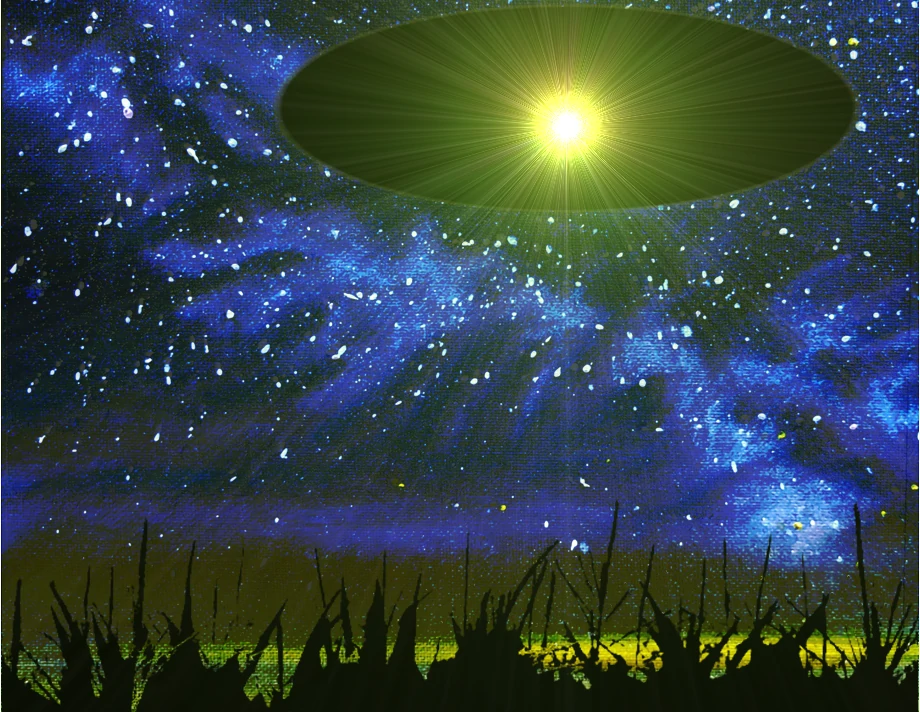
UOF!, Robert Roy, photo, August 12, 2:16am, near Cosmos, MN, along Route 7, facing west.
Last summer, on a clear night in late August, Robert Roy, from St. Cloud Minnesota, photographed a UFO. He’s been reluctant to share his story and photos publicly, stating, “I’d lose all credibility… and the guys at the barns would’ve never let me live it down.” He claims that the craft he spotted was certainly not from this world.
Robert works for the State Highway Department, where road construction projects often have him working overnight. He says the sighting occurred while repaving a rural stretch of Milky Way Street, outside of the town of Cosmos, MN.
Initially, Robert worried that the town’s affinity for space themed nomenclature would have many critics just laugh off his story and photos. But after he read our article titled, Milk Shed Massacre, in last month’s issue of The Skeptic, Robert felt he could no longer stay silent.
“I remember reading your [The Skeptic] line about the farmer, Bob Surd, ‘It was a bloodbath… Ain’t never seen nothing like it! I lost 43 head that night… only one’s that made it were the seven springers back at the barns.’ I felt awful packing up my gear… whole thing was a mess.”
After reading about dairy farmer Bob Surd’s difficulties recuperating after losing nearly his entire herd, Robert decided to go public. “I was there… I saw what was left the next morning. I’ve been terrified ever since…”
“I like taking long exposures of the night sky… the farther from the city lights, the better.” Robert’s an amateur photographer, and no stranger to shooting in the dark. His photos and time-lapse videos have been published in several journals, magazines, and online publications. When it comes to knowing how to photograph in the dark, Robert is well practiced.
“I’d set up my gear in the field before my shift started… it was a seven hour timelapse… weather was perfectly clear. I had one stationary camera and one tracking… and I always have a ready rig for taking quicker photos of late-night wildlife encounters.”
Robert says he was operating an asphalt roller when he first saw an unidentifiable object passing low and slowly overhead. “It was huge!” He says he thoughtlessly jumped off of the moving machine to chase the flying object into a cornfield. “I’m not a runner, but it was going so slow, enough that I was catching up. I was a couple hundred yards away from the road when I started feeling… ill.” He claims the object was spherical, yet wider and flatter around the middle; it moved silently; and had unusually golden lights that seemed to emit their light in a, “…disturbingly unnatural way… like the light was going through the stalks… there were no shadows…” Robert’s otherworldly story of what happened that night, and the strangeness that has followed him since the events will be featured in the next issue of The Skeptic.
Lewis Henry Martin’s Diachronic Newsletter
Headline
Liftoff!
On the evening of May 25, 2026, the LewisHenryMartin.com official website was quietly launched.
The site’s engineers had been tight-lipped as they diligently worked, keeping their construction under cover.
The successful launch occurred without a hitch, requiring only minor revision to eject the typical glitches and gremlins involved with such endeavors. The launch was considered a success! Now comes the enduring mission. It’s a long flight path with a high trajectory. Safe travels!
Lewis Henry Martin’s Diachronic Newsletter
Headline
Fingers Crossed!
Welcome to the debut publication of Lewis Henry Martin’s Diachronic Newsletter!
If you encounter any problems such as broken links, technical issues, or typographical errors, please let us know by using the form on the contact us page.
Lewis Henry Martin’s Diachronic Newsletter
Announcement
Lewis Henry Martin’s
Carroll Inlet
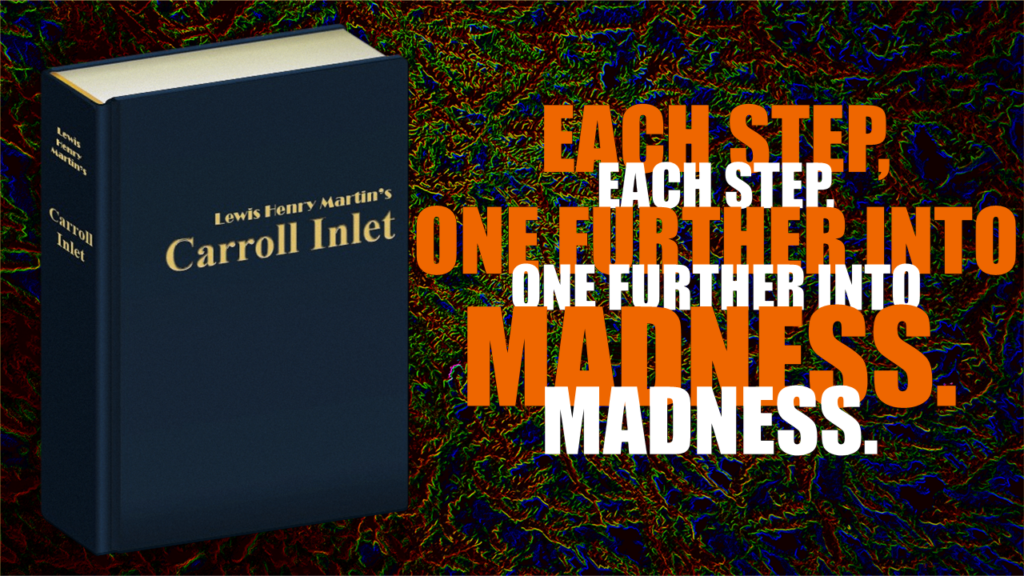
Norman Galloway, a man afraid of everything and riddled with psychosis, left his life and moved to remote Alaska, to live in an abandoned cabin, alone.
Only… he has no idea what fate has for him there.
Lewis Henry Martin is currently in the query trenches, working to publish his debut novel. You can track his progress here, and on LewisHenryMartin.com
Lewis Henry Martin’s Diachronic Newsletter
Announcement
Lewis Henry Martin’s
Mortise Latch & Masters
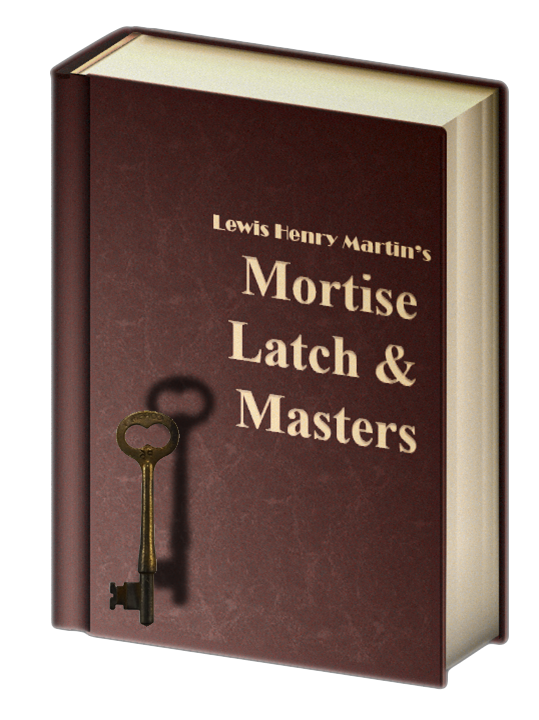
Junior was fortunate, he had a good father. Their immutable bond was fostered by worldly adventures visiting masters of craft. His devastating early death led to dark revelations, transforming Junior, chaining him to a grim inheritance. The only escape is confronting what’s locked in that room, beyond the door to his father’s study. Through that door is everything, the mortise latch is the key.
The current status of Mortise Latch & Masters is well underway, and progressing as expected!
Lewis Henry Martin’s Diachronic Newsletter
Announcement
The Sandbox
(Coming Soon!)
A place for everyone!
LewisHenryMartin.com is launching a new feature soon. A space where everyone can express their creativity.
First up:
Six Words To Story
Lewis Henry Martin will turn one chosen six word story prompt into a flash fiction work.
That’s a complete story in less than 1,000 words.
Stories inspired by chosen submissions will be published in the newsletter!
Next up:
Craft Your Castle
Lewis Henry Martin will offer newsletter subscribers a six word story prompt. You will turn that prompt into a flash fiction story.
One story will be chosen from each event to be published in the Newsletter!
Expect more information via the newsletter email.
Lewis Henry Martin’s Diachronic Newsletter
Gobbledygook
Copyright © June 2026 Lewis Henry Martin. All rights reserved.
No part of this publication may be reproduced, distributed, or transmitted in any form or by any means, including photocopying, recording, or other electronic or mechanical methods, without the prior written permission of the copyright owner, except as permitted by U.S. copyright law.
Lewis Henry Martin’s For Us; is a work of literary fiction. While real-world locations, landmarks, and institutions may be referenced, all events, incidents, and dialogues occurring at these locations are entirely fictional and not intended to reflect the actual history, character, or management of the places described. Additionally, all names, characters, and incidents portrayed in this work are fictitious. No identification with actual persons (living or deceased), is intended or should be inferred.
For Us; Lewis Henry Martin; 2026; oil on canvas board, 8×10. © Copyright Lewis Henry Martin, June 2026 , All Rights Reserved.
Minnesota Man Photos UFO! is a work of literary fiction. While real-world locations, landmarks, and institutions may be referenced, all events, incidents, and dialogues occurring at these locations are entirely fictional and not intended to reflect the actual history, character, or management of the places described. Additionally, all names, characters, and incidents portrayed in this work are fictitious. No identification with actual persons (living or deceased), is intended or should be inferred.
Faye L. Hashoss is a fictional character (not a real journalist). Faye L. Hashoss is a pseudonym of Lewis Henry Martin.
Robert Roy is a fictional character (not a real photographer) created by Lewis Henry Martin.
UFO!, Robert Roy, photo, August 12, 2:16am, near Cosmos, MN, along Route 7, facing west.; Lewis Henry Martin; 2026; Mixed media, oil on canvas board, 8×10 and digital. © Copyright Lewis Henry Martin, June 2026 , All Rights Reserved.
Bill Tremblestave is a fictional character (not a real journalist). Bill Tremblestave is a pseudonym created by Lewis Henry Martin.
Big Stories. Simple Philosophy.